While the telescope’s objective collects incoming photons, the eyepiece acts as the optical microscope magnifying that primary focal image. Even the finest apochromatic triplet or parabolic mirror will deliver mediocre views if paired with poorly designed eyepieces. Understanding focal lengths, barrel diameters, and optical geometries allows observers to unlock their instrument’s full potential.
Every telescope eyepiece is defined by three fundamental optical metrics: its focal length (measured in millimeters), its apparent field of view (AFOV, measured in degrees), and its eye relief (the physical distance from the outer glass element where the exit pupil is formed). Navigating these metrics allows you to curate an eyepiece kit tailored to your observing targets.
The Essential Mathematical Formulas of Eyepiece Optics
1. Magnification
Magnification = F_telescope / F_eyepiece
A 1200mm focal length telescope with a 10mm eyepiece yields exactly 120x magnification.
2. Exit Pupil
Exit Pupil = Aperture (mm) / Magnification
The diameter of the cylinder of light exiting the eyepiece into your eye’s dilated pupil.
3. True Field of View (TFOV)
TFOV = AFOV / Magnification
The actual slice of the sky in degrees visible when looking through the eyepiece.
Optimizing Eyepiece Ergonomics & Contrast Enhancement
Maximizing visual contrast through your eyepieces involves more than just focal length and magnification arithmetic. Environmental factors, optical glass maintenance, and human eye physiology dictate how effectively photons reach your brain.
Expert Field Practices for Eyepiece Observers:
- Managing Eyepiece Fogging and Dew: During chilly autumn and spring observation runs, heat and moisture from your warm eyelashes will condense onto the cold outer eye lens. Keep unmounted eyepieces inside a foam-lined accessory case with hand-warmer heat packs or use electrical 12V dew heater strips wrapped around the eyepiece barrel.
- Rubber Eyecup Adjustment: Fold down rubber eyecups if you wear glasses to achieve the full apparent field of view without vignetting. If observing without glasses, leave eyecups extended to block ambient peripheral glare from distant streetlights.
- Color and Contrast Filters: Threading standard 1.25-inch colored filters onto the bottom barrel of your eyepieces dramatically enhances specific planetary details: a #80A light blue filter boosts contrast in Jupiter’s Great Red Spot, while a #21 orange filter enhances the polar ice caps of Mars.
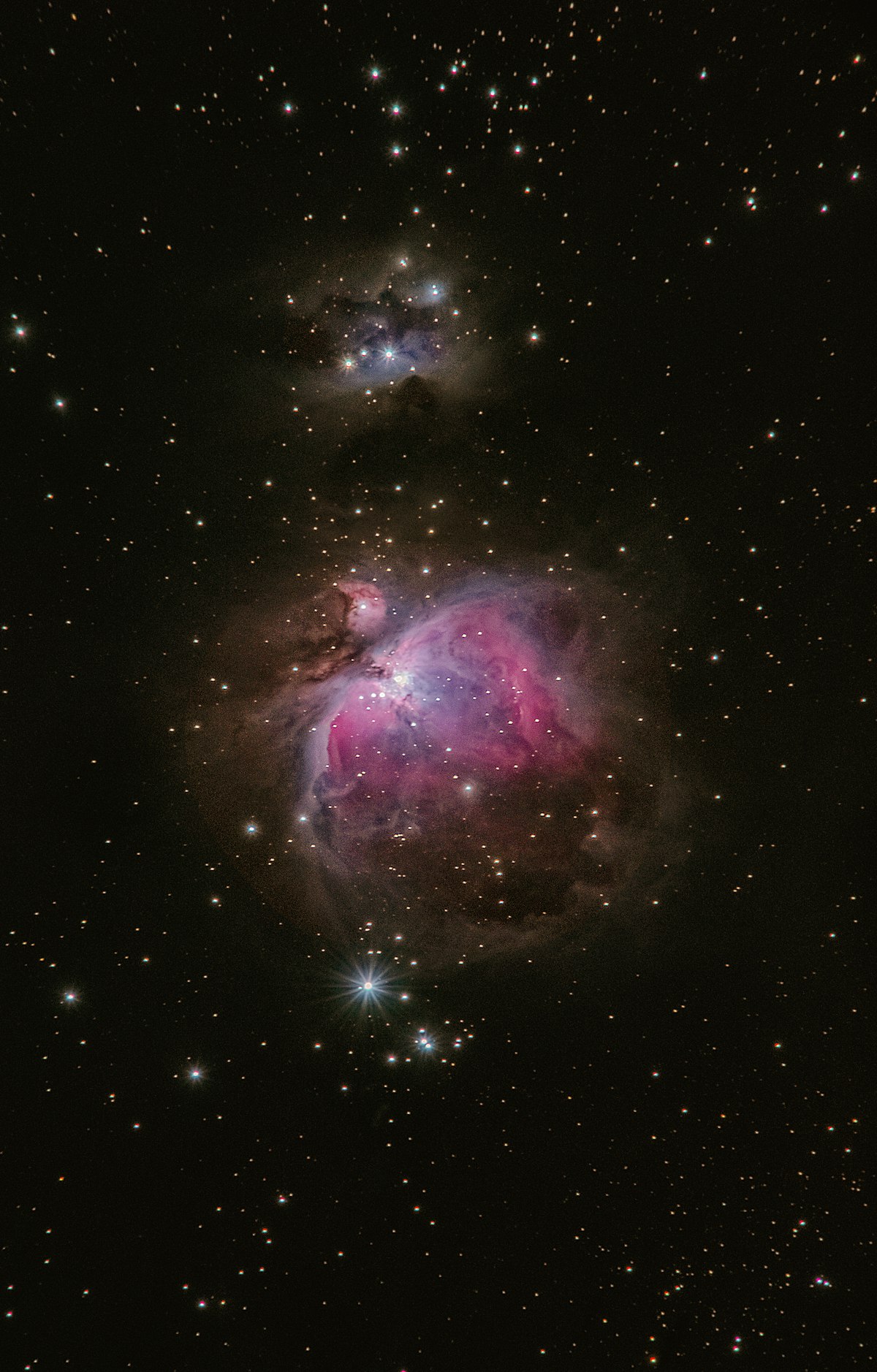
- Exit Pupil vs. Sky Glow: In urban and suburban backyards with moderate light pollution, using eyepieces that produce large exit pupils (over 5mm) will cause the background sky to appear bright gray, washing out faint nebulae. Dropping to a medium focal length eyepiece producing a 2mm to 3mm exit pupil darkens the sky background, significantly boosting perceived contrast on deep-sky targets.
Curating a balanced, high-transmission eyepiece collection is an investment that outlasts any single telescope tube, delivering crisp, breathtaking views across decades of stargazing adventures.
Major Eyepiece Optical Families Explained
1. The Plössl Design (Standard 50° Field)
Invented by Georg Simon Plössl in 1860, the four-element symmetrical Plössl consists of two achromatic doublets facing each other. Plössls provide exceptional contrast, excellent center-field sharpness, and minimal light scattering at an affordable price point. However, in focal lengths below 10mm, Plössl eye relief shrinks dramatically (often under 6mm), forcing observers to press their eyelashes directly against the glass.
2. Wide-Field & Ultra-Wide Eyepieces (68° to 82°)
Modern optical designs incorporate exotic high-refractive index glasses (such as lanthanum and ED glass) with 6 to 8 optical elements. Eyepieces featuring 68° (Erfle/Panoptic variants) or 82° (Nagler variants) apparent fields offer a “spacewalk” experience. Instead of looking down a narrow cardboard tube, the field stop vanishes beyond your peripheral vision, allowing you to observe expansive deep-sky targets like the Pleiades (M45) or the Double Cluster in Perseus in a single frame.
3. Planetary & Orthoscopic Eyepieces (40° to 45°)
For discerning planetary observers tracking white storms on Saturn or faint rift details in Jupiter’s Great Red Spot, Orthoscopic designs (Abbe triplets bonded to a single plano-convex eye lens) reign supreme. With only four glass-to-air surfaces, light transmission is maximized, internal ghosting is virtually eliminated, and on-axis contrast is pristine.
The human eye pupil dilates to a maximum of 5mm to 7mm in complete darkness (narrowing to roughly 5mm as we age). If an eyepiece produces an exit pupil greater than 7mm (for example, pairing a 40mm eyepiece with a fast f/4 telescope yields a 10mm exit pupil), the outer rays of light spill over your iris, effectively wasting telescope aperture. Aim for an exit pupil between 2mm and 5mm for deep sky observing, and 0.8mm to 1.5mm for high-magnification planetary study.
The Strategic Value of a 2x Barlow Lens
Named after English engineer Peter Barlow, a Barlow lens is a diverging negative achromatic doublet or triplet placed in the focuser drawtube immediately ahead of your eyepiece. It extends the telescope’s effective focal length by a factor of 2x (or 3x).
Incorporating a quality 2x Barlow lens into your astronomy gear offers two tremendous advantages:
- Doubles Your Eyepiece Collection: Owning three carefully chosen eyepieces (e.g., 32mm, 15mm, and 9mm) paired with a 2x Barlow effectively grants you six distinct focal lengths (32mm, 16mm, 15mm, 9mm, 7.5mm, and 4.5mm).
- Preserves Comfortable Eye Relief: Instead of squinting through an uncomfortable 5mm Plössl with 3mm of eye relief, you can insert a comfortable 10mm Plössl into a 2x Barlow, achieving the identical 5mm magnification while retaining the generous 7mm eye relief of the original lens.
| Eyepiece Type | Apparent Field (AFOV) | Typical Elements | Eye Relief Rating | Ideal Celestial Applications |
|---|---|---|---|---|
| Kellner / Modified Achromat | 40° – 45° | 3 Elements | Moderate to Poor | Budget Starter Kit, Moon |
| Standard Plössl | 50° – 52° | 4 Elements in 2 Groups | Short in <10mm | General Purpose & High Contrast |
| Wide-Angle (Erfle / SWA) | 66° – 72° | 5 – 6 Elements | Comfortable (15-20mm) | Nebulae, Large Star Clusters |
| Ultra-Wide (UWA / XWA) | 82° – 100° | 7 – 9 Elements | Generous | Dobsonian Star-Hopping, Immersive Vistas |
1.25-Inch vs. 2-Inch Eyepiece Barrels
Eyepieces are manufactured in two predominant mechanical barrel diameters: 1.25-inch (31.75mm) and 2-inch (50.8mm). A 2-inch barrel does not inherently make an image brighter; rather, its wider clear physical opening (field stop) allows lower-magnification eyepieces to transmit a significantly wider true field of view without vignetting. If you want to fit the entirety of the 3-degree-wide Andromeda Galaxy into a single eyepiece frame on an 8-inch telescope, a 2-inch wide-field eyepiece is essential.
Frequently Asked Questions
Do I need to wear glasses when looking through a telescope eyepiece?
If you have ordinary nearsightedness (myopia) or farsightedness (hyperopia), you can remove your glasses and refocus the telescope with the focuser knob to compensate for your vision. However, if you have astigmatism, you must wear your glasses or use an astigmatism-correcting lens mounted over the eyepiece to ensure pinpoint star images.
What does “Fully Multi-Coated” (FMC) mean on an eyepiece?
It means every air-to-glass optical surface has received multiple microscopic layers of anti-reflective coatings. FMC optics boost overall light transmission up to 99.5%, preventing internal reflections and glare.
What three focal lengths form the ideal beginner kit?
A 32mm Plössl (low power finder & wide deep sky), a 15mm Wide-Field (medium power for star clusters and nebulae), and a 9mm (high power for lunar and planetary details) plus a 2x Barlow lens form the most versatile complete setup.
Optimizing Eyepiece Ergonomics & Contrast Enhancement
Maximizing visual contrast through your eyepieces involves more than just focal length and magnification arithmetic. Environmental factors, optical glass maintenance, and human eye physiology dictate how effectively photons reach your brain.
Expert Field Practices for Eyepiece Observers:
- Managing Eyepiece Fogging and Dew: During chilly autumn and spring observation runs, heat and moisture from your warm eyelashes will condense onto the cold outer eye lens. Keep unmounted eyepieces inside a foam-lined accessory case with hand-warmer heat packs or use electrical 12V dew heater strips wrapped around the eyepiece barrel.
- Rubber Eyecup Adjustment: Fold down rubber eyecups if you wear glasses to achieve the full apparent field of view without vignetting. If observing without glasses, leave eyecups extended to block ambient peripheral glare from distant streetlights.
- Color and Contrast Filters: Threading standard 1.25-inch colored filters onto the bottom barrel of your eyepieces dramatically enhances specific planetary details: a #80A light blue filter boosts contrast in Jupiter’s Great Red Spot, while a #21 orange filter enhances the polar ice caps of Mars.
- Exit Pupil vs. Sky Glow: In urban and suburban backyards with moderate light pollution, using eyepieces that produce large exit pupils (over 5mm) will cause the background sky to appear bright gray, washing out faint nebulae. Dropping to a medium focal length eyepiece producing a 2mm to 3mm exit pupil darkens the sky background, significantly boosting perceived contrast on deep-sky targets.
Curating a balanced, high-transmission eyepiece collection is an investment that outlasts any single telescope tube, delivering crisp, breathtaking views across decades of stargazing adventures.
Optimizing Eyepiece Ergonomics & Contrast Enhancement
Maximizing visual contrast through your eyepieces involves more than just focal length and magnification arithmetic. Environmental factors, optical glass maintenance, and human eye physiology dictate how effectively photons reach your brain.
Expert Field Practices for Eyepiece Observers:
- Managing Eyepiece Fogging and Dew: During chilly autumn and spring observation runs, heat and moisture from your warm eyelashes will condense onto the cold outer eye lens. Keep unmounted eyepieces inside a foam-lined accessory case with hand-warmer heat packs or use electrical 12V dew heater strips wrapped around the eyepiece barrel.
- Rubber Eyecup Adjustment: Fold down rubber eyecups if you wear glasses to achieve the full apparent field of view without vignetting. If observing without glasses, leave eyecups extended to block ambient peripheral glare from distant streetlights.
- Color and Contrast Filters: Threading standard 1.25-inch colored filters onto the bottom barrel of your eyepieces dramatically enhances specific planetary details: a #80A light blue filter boosts contrast in Jupiter’s Great Red Spot, while a #21 orange filter enhances the polar ice caps of Mars.
- Exit Pupil vs. Sky Glow: In urban and suburban backyards with moderate light pollution, using eyepieces that produce large exit pupils (over 5mm) will cause the background sky to appear bright gray, washing out faint nebulae. Dropping to a medium focal length eyepiece producing a 2mm to 3mm exit pupil darkens the sky background, significantly boosting perceived contrast on deep-sky targets.
Curating a balanced, high-transmission eyepiece collection is an investment that outlasts any single telescope tube, delivering crisp, breathtaking views across decades of stargazing adventures.