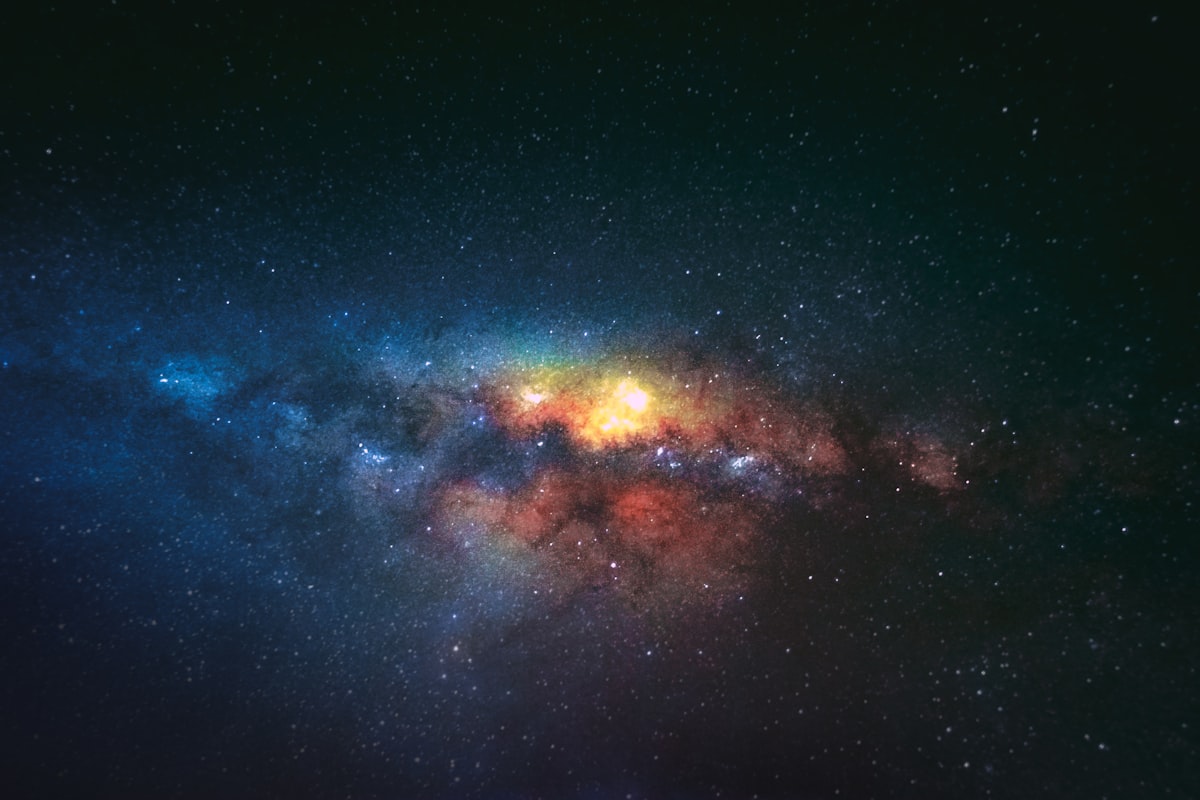
At a distance of 2.537 million light-years, the Andromeda Galaxy (cataloged as Messier 31 or NGC 224) is the most distant object visible to the naked human eye without optical aid. When photons from Andromeda strike your retina tonight, that light departed our neighboring galactic island when our early hominid ancestors were first crafting crude stone tools.
Spanning over 220,000 light-years in diameter and containing an estimated one trillion stars—more than double the stellar population of our own Milky Way—Andromeda is the gravitational anchor of our Local Group of galaxies. Learning how to locate and observe this majestic cosmic spiral is a hallmark rite of passage for every amateur astronomer.
Star-Hopping to Andromeda: The Easy Method
Finding M31 in the autumn and winter night sky does not require computerized GoTo navigation. You can easily locate it by “star-hopping” using two prominent northern constellations: **Cassiopeia** (the celestial “W”) and **Pegasus** (the Great Square).
- Locate the Great Square of Pegasus high in the south/east sky. The top-left corner star is Alpheratz (Alpha Andromedae).
- Follow the arc of the constellation Andromeda eastward from Alpheratz: move two bright stars along the chain to Mirach (Beta Andromedae).
- From Mirach, take a sharp 90-degree hop north through two fainter stars (Mu and Nu Andromedae). Just beyond Nu Andromedae sits the fuzzy, glowing oval of Messier 31.
What Andromeda Looks Like Through Different Instruments
Naked Eye (Bortle 1-4)
Under dark rural skies, Andromeda appears as a soft, elongated misty patch roughly the size of a thumb held at arm’s length.
7×50 or 10×50 Binoculars
Arguably the best visual instrument for M31! Binoculars provide a generous 6° field of view, revealing the bright nuclear core and faint outer spiral halo spanning 3 full degrees.
8-Inch+ Telescope
Under dark skies, a medium aperture telescope resolves dark interstellar dust lanes cutting across the disk, along with satellite dwarf galaxies M32 and NGC 205.
Astrophotography Tips for Andromeda (M31): Capturing Galactic Spirals
While visually observing Andromeda reveals its bright core and fuzzy oval halo, capturing its majestic blue spiral arms, crimson hydrogen-alpha emission nebulae, and dark dust lanes requires targeted astrophotography techniques.
Imaging Checklist for Andromeda:
- Focal Length Selection (The 200mm – 500mm Sweet Spot): Because M31 spans over 3 degrees in the sky (six times wider than the full Moon), massive telescopes have too narrow a field of view, cutting off the outer arms. A 70mm to 80mm refractor (focal length 350mm to 480mm) or a 135mm to 200mm telephoto camera lens frames Andromeda and its two satellite galaxies (M32 and M110) perfectly.
- Managing Dynamic Range (Core vs. Arms): Andromeda’s core is intensely bright, while its outer spiral arms are exceptionally faint. If you expose for the faint arms (e.g., 3-minute exposures), the core will overexpose into an unrecoverable solid white blob. Astrophotographers use High Dynamic Range (HDR) techniques: take 30 short 30-second exposures for the core, and 60 long 180-second exposures for the outer arms, blending them in processing software.
- Enhancing H-Alpha Regions (NGC 206): Within Andromeda’s southwestern spiral arm sits NGC 206, a luminous blue star-forming cloud containing over 300 massive OB stars. Incorporating narrowband Hydrogen-Alpha (Ha) filter data reveals dozens of glowing red stellar nurseries dotted along Andromeda’s spiral lanes.
- Post-Processing Gradients: Because M31 spans a large swath of sky, background light pollution gradients are common. Employ background extraction tools in Siril, PixInsight, or Photoshop to reveal the subtle outer stellar halo without clipping dark dust filaments.
Photographing our grand sister galaxy connects you directly with the vast architectural scale of our universe, producing a stunning cosmic portrait to treasure forever.
The Great Island Universe Debate: Hubble’s Historic Discovery
Until the 1920s, the scientific consensus held that the Milky Way constituted the entire universe. Faint spiral objects were classified as “spiral nebulae”—clouds of glowing interstellar gas inside our own galaxy forming newborn solar systems.
In 1923, Edwin Hubble, utilizing the 100-inch Hooker Telescope on Mount Wilson in California, identified a pulsating Cepheid variable star (cataloged as V1) in the outer arm of M31. By calculating the period-luminosity relation discovered by Henrietta Swan Leavitt, Hubble proved that M31 was not a gas cloud inside our galaxy, but an entirely independent “Island Universe” millions of light-years away, expanding humanity’s cosmic horizons tenfold in a single afternoon.
The Inevitable Collision: Milkomeda in 4.5 Billion Years
While the broader universe expands and distant galaxies rush away from us, the Milky Way and Andromeda are gravitationally bound. Andromeda is rushing toward our galaxy at approximately 110 kilometers per second (400,000 km/h).
Astrophysical simulations reveal that in roughly 4.5 billion years, our two galaxies will collide. Because interstellar distances between stars are vast—light-years apart—individual stars will almost certainly never physically collide. Instead, tidal gravitational forces will rip long tidal tails of gas and stars into intergalactic space. The collision will compress interstellar gas clouds, triggering a spectacular burst of star formation before the two supermassive black holes merge, ultimately settling into a single giant elliptical galaxy dubbed **Milkomeda**.
| Astronomical Parameter | Andromeda Galaxy (M31) | Milky Way Galaxy |
|---|---|---|
| Distance from Earth | 2,537,000 Light-Years | 0 Light-Years (We reside inside) |
| Diameter | ~220,000 Light-Years | ~100,000 Light-Years |
| Estimated Stellar Population | ~1 Trillion Stars | 200 – 400 Billion Stars |
| Central Supermassive Black Hole | ~140 Million Solar Masses | Sagittarius A* (4.3 Million Solar Masses) |
| Apparent Sky Size | 3.2° × 1.0° (6x width of Full Moon!) | 360° Panoramic Arch |
Frequently Asked Questions
Why does Andromeda look smaller in my telescope than in photos?
Human eyes only detect high surface-brightness regions in real time, so you see primarily the bright core. Long-exposure astrophotographs accumulate faint photons across several hours, revealing the delicate outer spiral arms spanning over six times the angular diameter of the full Moon.
What are the two bright satellite companions visible near M31?
They are Messier 32 (M32) and Messier 110 (NGC 205). M32 is a compact dwarf elliptical galaxy located just south of Andromeda’s core, while M110 is an elongated dwarf spheroidal galaxy located to the northwest.
What is the best time of year to observe Andromeda?
In the Northern Hemisphere, Andromeda rises high toward the zenith during autumn and early winter months (September through January), offering the clearest views free from horizon atmospheric turbulence.
Astrophotography Tips for Andromeda (M31): Capturing Galactic Spirals
While visually observing Andromeda reveals its bright core and fuzzy oval halo, capturing its majestic blue spiral arms, crimson hydrogen-alpha emission nebulae, and dark dust lanes requires targeted astrophotography techniques.
Imaging Checklist for Andromeda:
- Focal Length Selection (The 200mm – 500mm Sweet Spot): Because M31 spans over 3 degrees in the sky (six times wider than the full Moon), massive telescopes have too narrow a field of view, cutting off the outer arms. A 70mm to 80mm refractor (focal length 350mm to 480mm) or a 135mm to 200mm telephoto camera lens frames Andromeda and its two satellite galaxies (M32 and M110) perfectly.
- Managing Dynamic Range (Core vs. Arms): Andromeda’s core is intensely bright, while its outer spiral arms are exceptionally faint. If you expose for the faint arms (e.g., 3-minute exposures), the core will overexpose into an unrecoverable solid white blob. Astrophotographers use High Dynamic Range (HDR) techniques: take 30 short 30-second exposures for the core, and 60 long 180-second exposures for the outer arms, blending them in processing software.
- Enhancing H-Alpha Regions (NGC 206): Within Andromeda’s southwestern spiral arm sits NGC 206, a luminous blue star-forming cloud containing over 300 massive OB stars. Incorporating narrowband Hydrogen-Alpha (Ha) filter data reveals dozens of glowing red stellar nurseries dotted along Andromeda’s spiral lanes.
- Post-Processing Gradients: Because M31 spans a large swath of sky, background light pollution gradients are common. Employ background extraction tools in Siril, PixInsight, or Photoshop to reveal the subtle outer stellar halo without clipping dark dust filaments.
Photographing our grand sister galaxy connects you directly with the vast architectural scale of our universe, producing a stunning cosmic portrait to treasure forever.
Astrophotography Tips for Andromeda (M31): Capturing Galactic Spirals
While visually observing Andromeda reveals its bright core and fuzzy oval halo, capturing its majestic blue spiral arms, crimson hydrogen-alpha emission nebulae, and dark dust lanes requires targeted astrophotography techniques.
Imaging Checklist for Andromeda:
- Focal Length Selection (The 200mm – 500mm Sweet Spot): Because M31 spans over 3 degrees in the sky (six times wider than the full Moon), massive telescopes have too narrow a field of view, cutting off the outer arms. A 70mm to 80mm refractor (focal length 350mm to 480mm) or a 135mm to 200mm telephoto camera lens frames Andromeda and its two satellite galaxies (M32 and M110) perfectly.
- Managing Dynamic Range (Core vs. Arms): Andromeda’s core is intensely bright, while its outer spiral arms are exceptionally faint. If you expose for the faint arms (e.g., 3-minute exposures), the core will overexpose into an unrecoverable solid white blob. Astrophotographers use High Dynamic Range (HDR) techniques: take 30 short 30-second exposures for the core, and 60 long 180-second exposures for the outer arms, blending them in processing software.
- Enhancing H-Alpha Regions (NGC 206): Within Andromeda’s southwestern spiral arm sits NGC 206, a luminous blue star-forming cloud containing over 300 massive OB stars. Incorporating narrowband Hydrogen-Alpha (Ha) filter data reveals dozens of glowing red stellar nurseries dotted along Andromeda’s spiral lanes.
- Post-Processing Gradients: Because M31 spans a large swath of sky, background light pollution gradients are common. Employ background extraction tools in Siril, PixInsight, or Photoshop to reveal the subtle outer stellar halo without clipping dark dust filaments.
Photographing our grand sister galaxy connects you directly with the vast architectural scale of our universe, producing a stunning cosmic portrait to treasure forever.