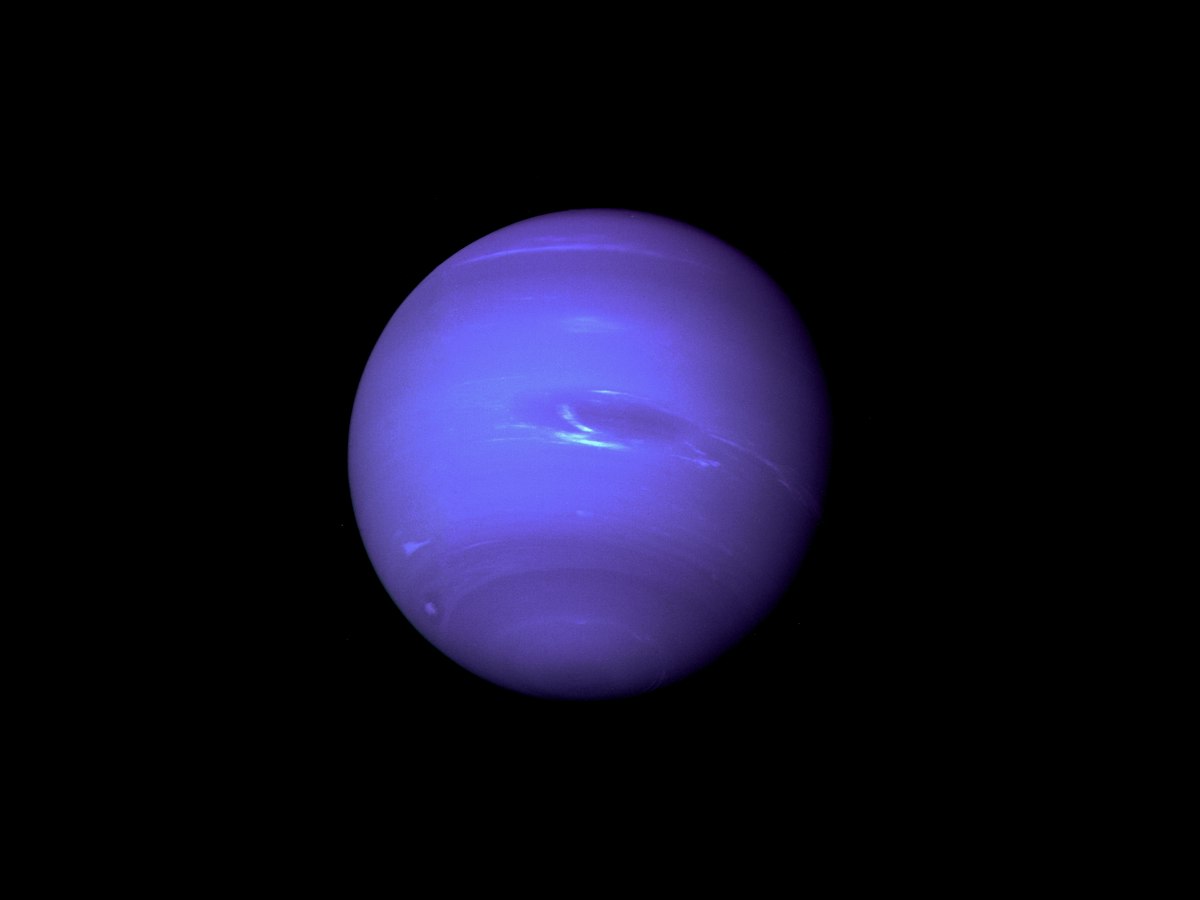
For almost every amateur astronomer, the moment that transforms casual interest into a lifelong passion is the first time they center Saturn or Jupiter in a telescope eyepiece. Seeing Saturn’s ring system suspended in black velvet space or watching four Galilean moons dancing around Jupiter’s banded atmosphere delivers an emotional connection that flat photographs can never replicate.
Unlike faint, wispy deep-sky nebulae and galaxies that require pitch-black rural skies, planets are exceptionally bright. You can observe Jupiter and Saturn from downtown urban balconies and light-polluted suburban backyards with breathtaking clarity. Success depends entirely on optical stability, atmospheric “seeing” conditions, and using the proper magnification techniques.
Observing Jupiter: The King of Planets
Jupiter is the largest planet in our solar system—over 1,300 Earths could fit inside its volume. Even through modest 10×50 binoculars, Jupiter appears as a distinct miniature creamy disk flanked by a straight line of star-like points: the four Galilean moons.
The Four Galilean Moons
Discovered by Galileo Galilei in January 1610, these four worlds orbit Jupiter in rapid clockwork harmony:
- Io: The innermost major moon, completing an orbit every 42 hours. The most volcanically active body in the solar system.
- Europa: An icy ocean world harboring a global liquid water sea beneath an icy crust, orbiting every 3.5 days.
- Ganymede: The largest moon in our solar system—larger than the planet Mercury—possessing its own intrinsic magnetic field.
- Callisto: The outermost, heavily cratered ancient world, completing an orbit in 16.7 days.
With a 4-inch or larger telescope at 100x magnification, you can observe a Galilean moon pass in front of Jupiter. Even more spectacular is watching the moon’s **shadow transit**: a jet-black, pinpoint dot cast by the moon traveling across Jupiter’s cloud tops like a miniature solar eclipse. Free planetarium apps like Stellarium provide exact transit schedules.
Atmospheric Cloud Belts and the Great Red Spot
Through an aperture of 70mm to 100mm, Jupiter reveals its two prominent equatorial cloud bands: the **North Equatorial Belt (NEB)** and the **South Equatorial Belt (SEB)**. These dark russet stripes are ammonia-hydrosulfide clouds circulating in opposite directions at hundreds of kilometers per hour.
Embedded along the southern edge of the SEB resides the famous **Great Red Spot (GRS)**—a gargantuan anticyclonic storm larger than Earth that has raged for over 350 years. Because Jupiter completes one full rotation in just 9 hours and 55 minutes, the Great Red Spot swings into view and transits the central meridian every day, changing colors from salmon pink to brick red over multi-year cycles.
Observing Saturn: The Jewel of the Solar System
Saturn orbits approximately 1.4 billion kilometers from Earth. Even at modest 30x magnification in a beginner telescope, its magnificent ring system pops into view. With 100x to 150x magnification under steady atmospheric seeing, fine architectural details emerge:
1. Cassini Division
A dark, 4,800-kilometer-wide gap separating outer Ring A from inner Ring B, cleared out by the gravitational resonance of Saturn’s moon Mimas.
2. Ring Tilt Cycle
Saturn’s 29.5-year orbit tilts its rings from a maximum 27° open angle down to edge-on (0°). During edge-on ring crossing years, the ultra-thin rings virtually disappear!
3. Moon Titan
Saturn’s giant orange-hued moon Titan shines brightly at magnitude 8.5, easily visible as a bright golden star hovering several ring-diameters away.
Planetary Astrophotography with “Lucky Imaging”
If you attempt to photograph Jupiter or Saturn using a standard single long exposure with a DSLR, the resulting image will almost always be a blurry, soft circle. The secret to capturing magazine-quality planetary photographs is a technique called **Lucky Imaging**.
How Lucky Imaging Defeats Atmospheric Turbulence:
- High-Speed Video Recording: Instead of taking still photos, planetary astrophotographers attach a high-speed planetary CMOS camera (like a ZWO ASI224MC or ASI678MC) to the telescope eyepiece focuser and record uncompressed high-framerate video (60 to 200 frames per second) for 2 to 3 minutes using free capture software like FireCapture or SharpCap.
- Sorting the Best Frames with AutoStakkert!: During a 2-minute video capture, thousands of frames are recorded. A free analysis program (AutoStakkert!) automatically analyzes the sharpness of every individual frame, discards the 85% of frames blurred by atmospheric turbulence, and selects the sharpest 10% to 15% that “got lucky” during moments of atmospheric stillness.
- Wavelet Sharpening in Registax: Once stacked into a clean, low-noise master image, the master file is opened in RegiStax or AstroSurface. Moving the wavelet frequency sliders extracts microscopic surface details: the individual cloud rifts of the Great Red Spot, white oval storms, and the razor-thin Cassini Division pop out with crystal clarity.
- Derotation with WinJUPOS: Because Jupiter rotates so rapidly (a full rotation in under 10 hours), video captures longer than 3 minutes will blur surface features due to planetary rotation. Software like WinJUPOS mathematically de-rotates multiple stacked videos taken over 15 to 30 minutes, producing ultra-deep planetary portraits.
Combining a modest telescope with lucky imaging software transforms your backyard into a planetary research observatory capable of monitoring real-time weather on solar system worlds.
Mastering Atmospheric Seeing: Pickering Scale Tips
Planetary details are easily smeared by atmospheric turbulence—warm air currents rising through Earth’s atmosphere. Astronomers measure this turbulence using the **Pickering Seeing Scale** (from 1 = violent bubbling to 10 = perfect rock-steady stability).
- Wait for Opposition: Observe planets when they are at “opposition” (directly opposite the Sun in our sky), when they are closest to Earth and appear at their largest angular diameter.
- Observe When High in the Sky: Never observe planets when they sit low near the horizon. When an object is at 20° altitude, its light must penetrate twice as much turbulent air as when it is high at 60° near the zenith.
- Avoid Heat Plumes: Never set up your telescope on sun-baked asphalt, concrete driveways, or directly downwind of building chimneys and heating vents. Grass fields provide the most thermally stable observing platform.
| Celestial Feature | Minimum Aperture | Recommended Magnification | Color Filter to Enhance |
|---|---|---|---|
| Jupiter’s 4 Galilean Moons | 50mm (or 10×50 Binoculars) | 10x – 40x | None required |
| Jupiter’s Equatorial Belts (NEB/SEB) | 70mm Refractor | 60x – 100x | #80A Light Blue or #12 Yellow |
| Jupiter’s Great Red Spot (GRS) | 100mm (4-inch) Scope | 120x – 180x | #21 Orange or #23A Light Red |
| Saturn’s Ring System & Disk | 60mm Refractor | 40x – 80x | None required |
| Saturn’s Cassini Division Gap | 100mm – 150mm Scope | 140x – 220x | #12 Deep Yellow or #8 Light Yellow |
Frequently Asked Questions
Why do planets appear to shimmer and boil in my eyepiece?
This is caused by turbulent jet streams in the upper atmosphere. Wait patiently at the eyepiece for brief 2-to-3-second moments of atmospheric calmness (“seeing pockets”) when the air stabilizes and fine planetary details snap into crystal-clear sharpness.
Can I see other moons around Saturn besides Titan?
Yes. With an 8-inch telescope, you can easily spot Rhea, Dione, Tethys, and Enceladus as faint stars hovering close to Saturn’s ring plane.
Do I need a motor-driven mount to view planets?
No, but it is very convenient. At 150x magnification, Earth’s rotation causes a planet to drift out of your field of view in about 30 to 45 seconds. On a manual Dobsonian mount, you gently nudge the tube by hand every minute to keep the planet centered.
Planetary Astrophotography with “Lucky Imaging”
If you attempt to photograph Jupiter or Saturn using a standard single long exposure with a DSLR, the resulting image will almost always be a blurry, soft circle. The secret to capturing magazine-quality planetary photographs is a technique called **Lucky Imaging**.
How Lucky Imaging Defeats Atmospheric Turbulence:
- High-Speed Video Recording: Instead of taking still photos, planetary astrophotographers attach a high-speed planetary CMOS camera (like a ZWO ASI224MC or ASI678MC) to the telescope eyepiece focuser and record uncompressed high-framerate video (60 to 200 frames per second) for 2 to 3 minutes using free capture software like FireCapture or SharpCap.
- Sorting the Best Frames with AutoStakkert!: During a 2-minute video capture, thousands of frames are recorded. A free analysis program (AutoStakkert!) automatically analyzes the sharpness of every individual frame, discards the 85% of frames blurred by atmospheric turbulence, and selects the sharpest 10% to 15% that “got lucky” during moments of atmospheric stillness.
- Wavelet Sharpening in Registax: Once stacked into a clean, low-noise master image, the master file is opened in RegiStax or AstroSurface. Moving the wavelet frequency sliders extracts microscopic surface details: the individual cloud rifts of the Great Red Spot, white oval storms, and the razor-thin Cassini Division pop out with crystal clarity.
- Derotation with WinJUPOS: Because Jupiter rotates so rapidly (a full rotation in under 10 hours), video captures longer than 3 minutes will blur surface features due to planetary rotation. Software like WinJUPOS mathematically de-rotates multiple stacked videos taken over 15 to 30 minutes, producing ultra-deep planetary portraits.
Combining a modest telescope with lucky imaging software transforms your backyard into a planetary research observatory capable of monitoring real-time weather on solar system worlds.
Planetary Astrophotography with “Lucky Imaging”
If you attempt to photograph Jupiter or Saturn using a standard single long exposure with a DSLR, the resulting image will almost always be a blurry, soft circle. The secret to capturing magazine-quality planetary photographs is a technique called **Lucky Imaging**.
How Lucky Imaging Defeats Atmospheric Turbulence:
- High-Speed Video Recording: Instead of taking still photos, planetary astrophotographers attach a high-speed planetary CMOS camera (like a ZWO ASI224MC or ASI678MC) to the telescope eyepiece focuser and record uncompressed high-framerate video (60 to 200 frames per second) for 2 to 3 minutes using free capture software like FireCapture or SharpCap.
- Sorting the Best Frames with AutoStakkert!: During a 2-minute video capture, thousands of frames are recorded. A free analysis program (AutoStakkert!) automatically analyzes the sharpness of every individual frame, discards the 85% of frames blurred by atmospheric turbulence, and selects the sharpest 10% to 15% that “got lucky” during moments of atmospheric stillness.
- Wavelet Sharpening in Registax: Once stacked into a clean, low-noise master image, the master file is opened in RegiStax or AstroSurface. Moving the wavelet frequency sliders extracts microscopic surface details: the individual cloud rifts of the Great Red Spot, white oval storms, and the razor-thin Cassini Division pop out with crystal clarity.
- Derotation with WinJUPOS: Because Jupiter rotates so rapidly (a full rotation in under 10 hours), video captures longer than 3 minutes will blur surface features due to planetary rotation. Software like WinJUPOS mathematically de-rotates multiple stacked videos taken over 15 to 30 minutes, producing ultra-deep planetary portraits.
Combining a modest telescope with lucky imaging software transforms your backyard into a planetary research observatory capable of monitoring real-time weather on solar system worlds.