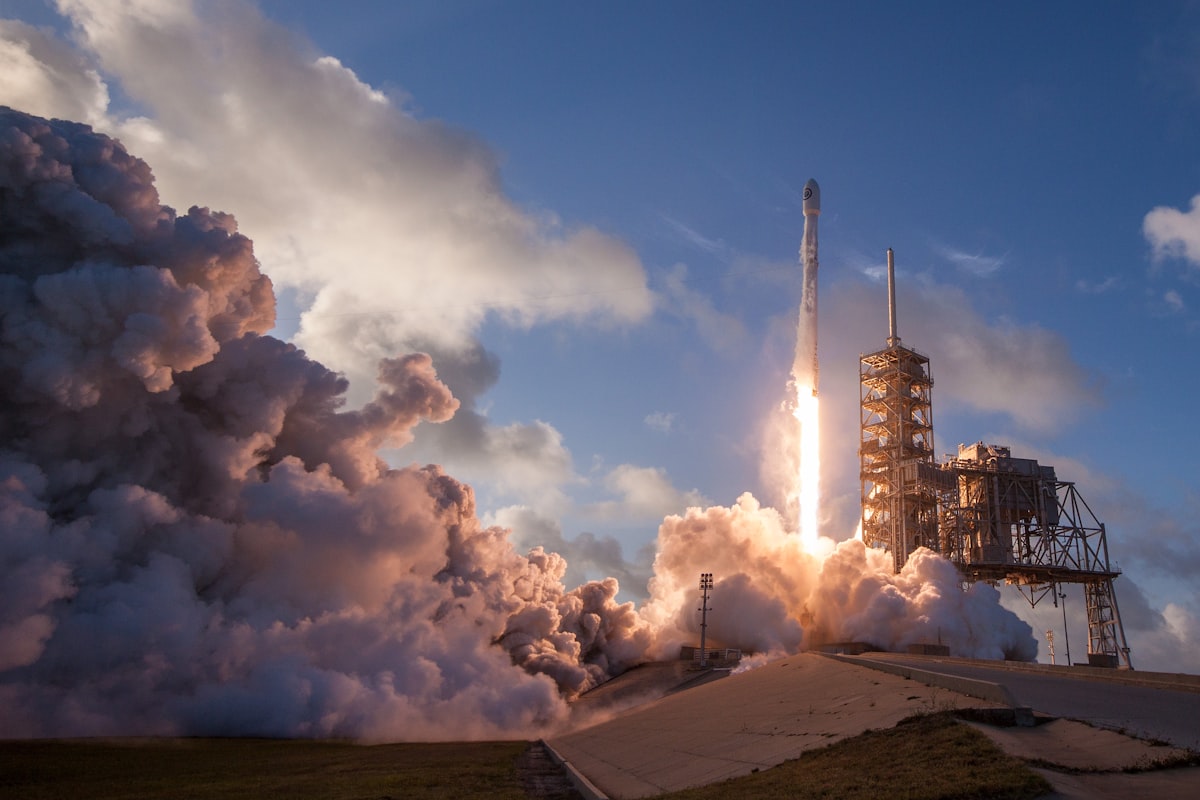
More than half a century after Apollo 17 commander Gene Cernan left the final human footprints in the powdery gray regolith of the Taurus-Littrow valley, humanity is preparing to return to the Moon. Through NASA’s ambitious Artemis program, this return is not merely a flags-and-footprints expedition, but a permanent, sustainable international effort to live, work, and build the foundation for missions to Mars.
Named after the Greek goddess of the Moon and twin sister of Apollo, the Artemis program unites NASA with international partners including the European Space Agency (ESA), Japan Aerospace Exploration Agency (JAXA), Canadian Space Agency (CSA), and commercial partners like SpaceX. Unlike Apollo, which explored equatorial volcanic plains, Artemis is targeted at the rugged, cratered Lunar South Pole.
Why the Lunar South Pole? The Liquid Water Goldrush
Because the Moon’s rotational axis is tilted only 1.5 degrees relative to the ecliptic, the bottoms of deep impact craters at the lunar poles have remained in permanent pitch-black darkness for billions of years. Inside these **Permanently Shadowed Regions (PSRs)**, temperatures hover near -246°C (-410°F)—cold enough to preserve volatile chemicals since the dawn of the solar system.
Orbital radar and impact probes have confirmed that these craters harbor hundreds of millions of tons of **water ice**. For future lunar explorers, water ice is far more than drinking water: using solar and nuclear electrolysis, it can be split into liquid hydrogen and liquid oxygen—the most efficient rocket propellant combination known. Mining water ice turns the Moon into a deep-space fueling depot, dramatically lowering the cost of reaching Mars.
Directly adjacent to the frozen shadowed crater depths sit elevated crater rims dubbed “Peaks of Eternal Light.” These high ridges receive nearly continuous sunlight for up to 90% of the lunar year, providing uninterrupted solar power generation and thermally stable locations for permanent base habitats.
The Four Technological Pillars of Artemis
Space Launch System (SLS)
A 322-foot super heavy-lift rocket generating 8.8 million pounds of thrust—15% more thrust than the historic Saturn V—powered by four RS-25 liquid engines and twin 5-segment solid boosters.
Orion Spacecraft & ESM
The astronaut crew capsule paired with the European Service Module (ESM). Designed to keep four astronauts alive for up to 21 days in deep space, with an advanced heat shield built for Mach 32 reentry.
The Lunar Gateway Station
A compact lunar orbital space station orbiting in a Near-Rectilinear Halo Orbit (NRHO). Serves as a staging post, communications relay, and science laboratory between Earth and surface landers.
In-Situ Resource Utilization (ISRU) & Lunar Base Power
Building a permanent, self-sustaining human outpost at the Moon’s South Pole requires severing the umbilical cord of resupply from Earth. Launching materials out of Earth’s deep gravity well costs thousands of dollars per kilogram; true sustainability hinges on **In-Situ Resource Utilization (ISRU)**.
Key Technological Systems of Artemis Base Camp:
- Volatiles Extraction & Water Mining (VIPER): NASA’s polar exploration rovers utilize 1-meter mechanical drills paired with mass spectrometers to prospect subsurface ice layers inside permanently shadowed craters. High-temperature thermal sublimation tents will heat the icy dirt, collecting purified water vapor to provide life support drinking water and rocket propellants.
- Fission Surface Power (FSP): While solar arrays on high crater rims provide abundant power during lunar day, surviving the 14-day polar night and powering industrial oxygen extraction plants requires continuous energy. NASA and the Department of Energy are developing compact 40-kilowatt nuclear fission reactors designed to operate autonomously for a decade without maintenance.
- 3D-Printed Regolith Habitats: Transporting concrete or metal habitat shells to the Moon is cost-prohibitive. Automated robotic rovers equipped with microwave or laser sintering systems will melt raw lunar dust into durable basaltic pavers, landing pads, and radiation-shielding domes capable of blocking galactic cosmic radiation and micrometeorites.
- The Foundation for Mars: Every system proven at the Artemis Base Camp—from closed-loop environmental life support systems (ECLSS) and surface spacesuits to deep-space autonomous medicine—serves as the direct testing ground for humanity’s first crewed voyage to Mars in the late 2030s.
The Artemis program represents the collective ambition of global spacefaring nations, transforming our Moon from a distant celestial monument into a bustling gateway to the solar system.
Artemis Flight Sequence: From Test Flights to Surface Boots
Artemis I (Completed November 2022)
The uncrewed maiden flight of SLS and Orion. The spacecraft completed a flawless 25.5-day mission traveling 1.4 million miles, entering a distant retrograde lunar orbit, traveling further into space than any spacecraft built for humans, and validating the high-speed thermal protection shield upon Pacific Ocean splashdown.
Artemis II: Crewed Lunar Flyby
A crew of four astronauts—Reid Wiseman, Victor Glover, Christina Koch, and Canadian astronaut Jeremy Hansen—will launch aboard SLS on a 10-day mission around the Moon on a free-return trajectory, becoming the first humans to venture beyond Low Earth Orbit since 1972.
Artemis III: The Historic Lunar South Pole Landing
Orion will carry four astronauts to lunar orbit, where it will dock with SpaceX’s Starship Human Landing System (HLS). Two astronauts—including the first woman and first person of color on the Moon—will transfer to Starship HLS and descend to the South Pole for a week-long surface expedition, conducting multiple moonwalks in next-generation Axiom Space extravehicular suits.
| Program Element | Apollo (1969–1972) | Artemis (Current & Future) |
|---|---|---|
| Exploration Goal | Cold War geopolitical demonstration | Permanent scientific base & stepping stone to Mars |
| Landing Latitude | Equatorial plains (0° – 26° latitude) | Lunar South Pole (85° – 90° South) |
| Resource Utilization | None (brought everything from Earth) | ISRU: Extracting water ice, oxygen, and solar power |
| Surface Habitation | Lunar Module cabin (max 3 days) | Artemis Base Camp & pressurized rovers (30–60 days) |
Frequently Asked Questions
What are the Artemis Accords?
The Artemis Accords are a non-binding multilateral agreement signed by over 40 nations, establishing shared principles of peaceful civil space exploration, transparency, interoperability, emergency astronaut assistance, and sustainable extraction of space resources in accordance with the 1967 Outer Space Treaty.
How will astronauts survive the harsh radiation environment on the Moon?
Because the Moon has no global magnetic field or atmosphere to shield against solar particle events (SPE) and cosmic rays, long-term Artemis base camp habitats will be covered in 2 to 3 meters of compacted lunar regolith, or constructed inside subterranean volcanic lava tubes.
Why use the Gateway space station instead of landing directly?
The Gateway station allows international components and surface landers to be swapped, refueled, and serviced in orbit over a 15-year operational lifecycle, eliminating the need to launch a completely new lander on every single mission.
In-Situ Resource Utilization (ISRU) & Lunar Base Power
Building a permanent, self-sustaining human outpost at the Moon’s South Pole requires severing the umbilical cord of resupply from Earth. Launching materials out of Earth’s deep gravity well costs thousands of dollars per kilogram; true sustainability hinges on **In-Situ Resource Utilization (ISRU)**.
Key Technological Systems of Artemis Base Camp:
- Volatiles Extraction & Water Mining (VIPER): NASA’s polar exploration rovers utilize 1-meter mechanical drills paired with mass spectrometers to prospect subsurface ice layers inside permanently shadowed craters. High-temperature thermal sublimation tents will heat the icy dirt, collecting purified water vapor to provide life support drinking water and rocket propellants.
- Fission Surface Power (FSP): While solar arrays on high crater rims provide abundant power during lunar day, surviving the 14-day polar night and powering industrial oxygen extraction plants requires continuous energy. NASA and the Department of Energy are developing compact 40-kilowatt nuclear fission reactors designed to operate autonomously for a decade without maintenance.
- 3D-Printed Regolith Habitats: Transporting concrete or metal habitat shells to the Moon is cost-prohibitive. Automated robotic rovers equipped with microwave or laser sintering systems will melt raw lunar dust into durable basaltic pavers, landing pads, and radiation-shielding domes capable of blocking galactic cosmic radiation and micrometeorites.
- The Foundation for Mars: Every system proven at the Artemis Base Camp—from closed-loop environmental life support systems (ECLSS) and surface spacesuits to deep-space autonomous medicine—serves as the direct testing ground for humanity’s first crewed voyage to Mars in the late 2030s.
The Artemis program represents the collective ambition of global spacefaring nations, transforming our Moon from a distant celestial monument into a bustling gateway to the solar system.
In-Situ Resource Utilization (ISRU) & Lunar Base Power
Building a permanent, self-sustaining human outpost at the Moon’s South Pole requires severing the umbilical cord of resupply from Earth. Launching materials out of Earth’s deep gravity well costs thousands of dollars per kilogram; true sustainability hinges on **In-Situ Resource Utilization (ISRU)**.
Key Technological Systems of Artemis Base Camp:
- Volatiles Extraction & Water Mining (VIPER): NASA’s polar exploration rovers utilize 1-meter mechanical drills paired with mass spectrometers to prospect subsurface ice layers inside permanently shadowed craters. High-temperature thermal sublimation tents will heat the icy dirt, collecting purified water vapor to provide life support drinking water and rocket propellants.
- Fission Surface Power (FSP): While solar arrays on high crater rims provide abundant power during lunar day, surviving the 14-day polar night and powering industrial oxygen extraction plants requires continuous energy. NASA and the Department of Energy are developing compact 40-kilowatt nuclear fission reactors designed to operate autonomously for a decade without maintenance.
- 3D-Printed Regolith Habitats: Transporting concrete or metal habitat shells to the Moon is cost-prohibitive. Automated robotic rovers equipped with microwave or laser sintering systems will melt raw lunar dust into durable basaltic pavers, landing pads, and radiation-shielding domes capable of blocking galactic cosmic radiation and micrometeorites.
- The Foundation for Mars: Every system proven at the Artemis Base Camp—from closed-loop environmental life support systems (ECLSS) and surface spacesuits to deep-space autonomous medicine—serves as the direct testing ground for humanity’s first crewed voyage to Mars in the late 2030s.
The Artemis program represents the collective ambition of global spacefaring nations, transforming our Moon from a distant celestial monument into a bustling gateway to the solar system.