On August 23, 2023, at 18:04 IST, history was made. As the Vikram lander fired its variable-thrust liquid engines, gently touching down near the Moon’s South Pole, India became the fourth nation to achieve a soft landing on the lunar surface—and the very first nation in human history to land successfully in the challenging, cratered southern polar terrain.
The story of the Indian Space Research Organisation (ISRO) is one of the most remarkable chronicles in aerospace history. Founded in 1969 under the visionary leadership of Dr. Vikram Sarabhai, ISRO famously began its modest journey transporting sounding rocket components on the back of bicycles in the coastal village of Thumba. Today, ISRO stands in the top tier of planetary exploration agencies, celebrated globally for world-class engineering, mission reliability, and unmatched fiscal efficiency.
Four Milestone Missions That Defined ISRO’s Legacy
Chandrayaan-1 (2008)
Carried NASA’s Moon Mineralogy Mapper (M3). Proved the existence of water molecules (H2O and OH) across the lunar polar regolith, altering lunar science forever.
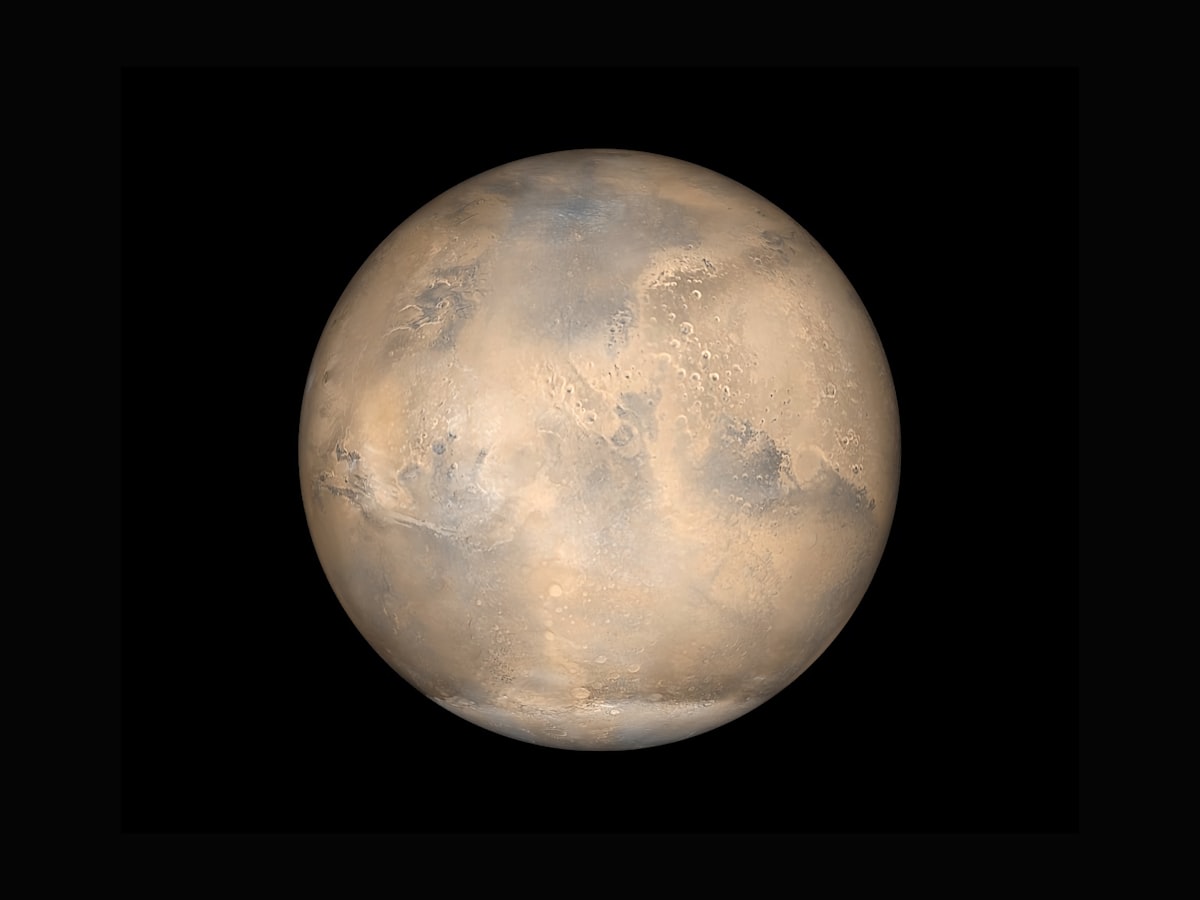
Mangalyaan (MOM – 2013)
India’s first interplanetary mission. Successfully entered Martian orbit on its maiden attempt at an astonishing budget of just $74 million—cheaper than a Hollywood sci-fi movie.
Chandrayaan-3 (2023)
The historic South Pole soft landing. Deployed rover Pragyan to confirm elemental sulfur and measure lunar soil thermal conductivity in real time.
The Next Frontier: Gaganyaan & The Bharatiya Antariksh Station
Following the global triumphs of Chandrayaan-3 and the Aditya-L1 solar observatory, ISRO has initiated its most ambitious and complex endeavor yet: the **Gaganyaan Human Spaceflight Programme**.
India’s Roadmap to Human Orbital Independence:
- Human-Rated Launch Vehicle Mark 3 (LVM3): ISRO’s heavy-lift workhorse rocket has been extensively re-engineered with redundant avionics, structural safety margins, and an autonomous Crew Escape System (CES) capable of pulling the astronaut capsule away to safety within milliseconds of any launch anomaly.
- The Orbital Module & Vyommitra: The 3.7-ton pressurized crew capsule provides a benign shirtsleeve environment for up to three astronauts for three days in a 400-kilometer orbit. Before human flight, ISRO will launch uncrewed test flights carrying **Vyommitra**—an advanced female humanoid robot equipped with biometric sensors to monitor cabin pressure, oxygen levels, and acceleration stress during launch and splashdown.
- The Bharatiya Antariksh Station (BAS): Approved as part of India’s long-term space roadmap, ISRO plans to launch the first module (BAS-1) by 2028, scaling up to an independent permanent space station in Low Earth Orbit by 2035 to conduct microgravity pharmaceutical, metallurgical, and quantum communication research.
- Targeting Indian Astronauts on the Moon by 2040: Prime Minister Narendra Modi officially mandated ISRO to establish the technological capability to land an Indian astronaut on the lunar surface by 2040, supported by next-generation heavy-lift rockets (NGLV) currently in active development.
From humble beginnings to lunar south pole landings and sovereign human space stations, India’s space odyssey demonstrates the transformative power of science, dedication, and engineering ingenuity.
The Engineering Brilliance of Chandrayaan-3
Following the heartbreaking communications loss of the Chandrayaan-2 Vikram lander in September 2019 just 2.1 kilometers above the lunar surface, ISRO adopted a radically proactive engineering philosophy for Chandrayaan-3: “Failure-Based Design.”
Engineers systematically identified every plausible failure mode and implemented comprehensive mechanical redundancies:
- Expanded Landing Footprint: The target landing zone was expanded from a narrow 500m × 500m patch to a generous 4km × 2.4km rectangle.
- Reinforced Landing Legs: Landing struts were mechanically re-engineered to absorb touchdown velocities up to 3 meters per second without tipping.
- Laser Doppler Velocimeter (LDV): Added a 3D laser sensing suite to measure precise vertical and horizontal ground speed in real time, independent of optical terrain cameras.
- Expanded Fuel Reserves: Generous propellant tanks gave the lander hovering capability to autonomously identify safe, boulder-free touchdown sites.
Pragyan Rover: In-Situ Discoveries on the South Pole
After descending down Vikram’s ramp, the 26-kilogram six-wheeled rover **Pragyan** navigated 100 meters of the lunar surface. Utilizing its Laser-Induced Breakdown Spectroscope (LIBS) and Alpha Particle X-ray Spectrometer (APXS), Pragyan produced the first unambiguous in-situ confirmation of **elemental sulfur** in southern polar regolith, alongside aluminum, calcium, iron, titanium, and silicon.
Simultaneously, the ChaSTE (Chandra’s Surface Thermophysical Experiment) probe recorded that while surface temperatures reached +50°C in direct sunlight, the soil temperature plunged to -10°C just 8 centimeters beneath the surface, revealing that lunar regolith is one of the most effective natural thermal insulators in the solar system.
| Future ISRO Program | Target Destination | Expected Launch Window | Primary Strategic Objective |
|---|---|---|---|
| Gaganyaan | Low Earth Orbit (400 km) | 2025 – 2026 | Launch 3 Indian astronauts (Gaganauts) for 3-day orbital flight |
| LUPEX (Chandrayaan-4) | Lunar South Pole | 2026 – 2028 | Joint ISRO-JAXA mission with 350kg rover drilling for water ice |
| Shukrayaan-1 | Venus Orbit | 2028 | Radar subsurface profiling of Venusian volcanic atmosphere |
| Bharatiya Antariksh Station | Low Earth Orbit | 2028 – 2035 | India’s independent permanent orbital space station |
Frequently Asked Questions
How does ISRO achieve such low mission costs?
ISRO maintains cost leadership through indigenous technological development, lean engineering teams, iterative testing, utilizing gravity-assist orbital slingshot mechanics rather than overpowered rockets, and leveraging India’s competitive domestic precision aerospace manufacturing base.
What is Aditya-L1?
Launched in September 2023, Aditya-L1 is India’s first dedicated solar coronagraph observatory, stationed at the Sun-Earth L1 Lagrange point 1.5 million km away to continuously monitor coronal mass ejections, solar flares, and space weather.
What is National Space Day in India?
The Government of India officially declared August 23 as “National Space Day” to celebrate the anniversary of Chandrayaan-3’s historic Vikram lander touchdown on the Moon’s South Pole.
The Next Frontier: Gaganyaan & The Bharatiya Antariksh Station
Following the global triumphs of Chandrayaan-3 and the Aditya-L1 solar observatory, ISRO has initiated its most ambitious and complex endeavor yet: the **Gaganyaan Human Spaceflight Programme**.
India’s Roadmap to Human Orbital Independence:
- Human-Rated Launch Vehicle Mark 3 (LVM3): ISRO’s heavy-lift workhorse rocket has been extensively re-engineered with redundant avionics, structural safety margins, and an autonomous Crew Escape System (CES) capable of pulling the astronaut capsule away to safety within milliseconds of any launch anomaly.
- The Orbital Module & Vyommitra: The 3.7-ton pressurized crew capsule provides a benign shirtsleeve environment for up to three astronauts for three days in a 400-kilometer orbit. Before human flight, ISRO will launch uncrewed test flights carrying **Vyommitra**—an advanced female humanoid robot equipped with biometric sensors to monitor cabin pressure, oxygen levels, and acceleration stress during launch and splashdown.
- The Bharatiya Antariksh Station (BAS): Approved as part of India’s long-term space roadmap, ISRO plans to launch the first module (BAS-1) by 2028, scaling up to an independent permanent space station in Low Earth Orbit by 2035 to conduct microgravity pharmaceutical, metallurgical, and quantum communication research.
- Targeting Indian Astronauts on the Moon by 2040: Prime Minister Narendra Modi officially mandated ISRO to establish the technological capability to land an Indian astronaut on the lunar surface by 2040, supported by next-generation heavy-lift rockets (NGLV) currently in active development.
From humble beginnings to lunar south pole landings and sovereign human space stations, India’s space odyssey demonstrates the transformative power of science, dedication, and engineering ingenuity.
The Next Frontier: Gaganyaan & The Bharatiya Antariksh Station
Following the global triumphs of Chandrayaan-3 and the Aditya-L1 solar observatory, ISRO has initiated its most ambitious and complex endeavor yet: the **Gaganyaan Human Spaceflight Programme**.
India’s Roadmap to Human Orbital Independence:
- Human-Rated Launch Vehicle Mark 3 (LVM3): ISRO’s heavy-lift workhorse rocket has been extensively re-engineered with redundant avionics, structural safety margins, and an autonomous Crew Escape System (CES) capable of pulling the astronaut capsule away to safety within milliseconds of any launch anomaly.
- The Orbital Module & Vyommitra: The 3.7-ton pressurized crew capsule provides a benign shirtsleeve environment for up to three astronauts for three days in a 400-kilometer orbit. Before human flight, ISRO will launch uncrewed test flights carrying **Vyommitra**—an advanced female humanoid robot equipped with biometric sensors to monitor cabin pressure, oxygen levels, and acceleration stress during launch and splashdown.
- The Bharatiya Antariksh Station (BAS): Approved as part of India’s long-term space roadmap, ISRO plans to launch the first module (BAS-1) by 2028, scaling up to an independent permanent space station in Low Earth Orbit by 2035 to conduct microgravity pharmaceutical, metallurgical, and quantum communication research.
- Targeting Indian Astronauts on the Moon by 2040: Prime Minister Narendra Modi officially mandated ISRO to establish the technological capability to land an Indian astronaut on the lunar surface by 2040, supported by next-generation heavy-lift rockets (NGLV) currently in active development.
From humble beginnings to lunar south pole landings and sovereign human space stations, India’s space odyssey demonstrates the transformative power of science, dedication, and engineering ingenuity.
5. Project Gaganyaan: India’s Leap into Human Spaceflight
Building upon its uncrewed exploration triumphs, ISRO’s most ambitious contemporary endeavor is Gaganyaan—India’s human spaceflight program designed to launch a 3-member crew into a 400-kilometer Low Earth Orbit (LEO) and bring them safely back to Earth with a splashdown in the Arabian Sea.
Achieving crew-rated reliability required ISRO to engineer critical new indigenous aerospace technologies:
- Human-Rated LVM3 (HLVM3): The heavy-lift launch vehicle was re-engineered with an intelligent fault detection system, redundant avionics, and structural strengthening to ensure astronaut survivability.
- Crew Escape System (CES): High-thrust solid motors capable of ripping the crew module away from the launch vehicle within milliseconds in the event of a pad or ascent anomaly, successfully demonstrated in the historic TV-D1 test flight.
- Vyommitra Humanoid Robot: A sophisticated, half-humanoid artificial intelligence robot equipped to monitor module environmental parameters, operate life support panels, and record physiological data during uncrewed orbital qualification flights.
6. The Bharatiya Antariksh Station (BAS) and Lunar Landing 2040
India’s long-term space exploration roadmap stretches far beyond solitary orbital flights. Prime Minister Narendra Modi and ISRO leadership officially announced two historic multi-decade national objectives:
- Bharatiya Antariksh Station (BAS-1): India’s sovereign, permanently crewed space station in low Earth orbit, with the initial orbital module scheduled for deployment by 2028 and full operational capability targeted for 2035.
- Chandrayaan-4 Lunar Sample Return: A complex multi-module mission utilizing dual launches to collect lunar soil samples from the south polar region and return them to Earth via automated orbital docking maneuvers.
- Indian Astronaut on the Moon by 2040: The ultimate pinnacle of the space vision, landing Indian astronauts on the lunar surface aboard the next-generation Next-Generation Launch Vehicle (NGLV) powered by semi-cryogenic and cryogenic propulsion.