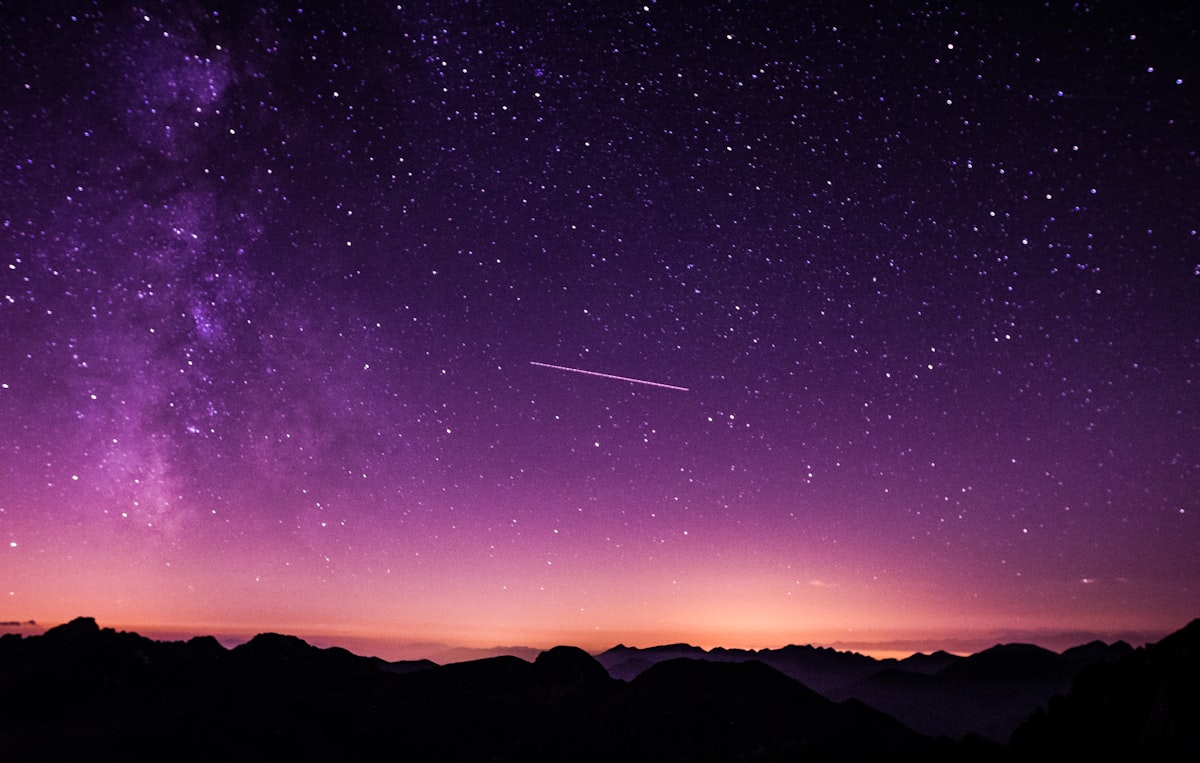
Over 80% of the world’s population—and more than 99% of people living in the United States and Europe—live under night skies tainted by artificial light pollution. For hundreds of millions of children and adults, the arch of our home galaxy, the Milky Way, is completely invisible. To quantify sky quality and guide observers to pristine celestial sanctuaries, astronomers rely on the Bortle Dark-Sky Scale.
Published in the February 2001 issue of *Sky & Telescope* magazine by veteran amateur astronomer John E. Bortle, the scale divides night skies into nine discrete numeric classes. Unlike purely instrument-based meters that measure sky surface brightness (magnitudes per square arcsecond, or mpsas), the Bortle Scale evaluates real-world astronomical benchmarks: naked-eye limiting magnitude (NELM), zodiacal light visibility, and deep-sky contrast.
The 9 Classes of the Bortle Scale Breakdown
NELM: 7.6 to 8.0 | SQM: 21.75 – 22.0
The Milky Way casts noticeable ground shadows. Zodiacal light is striking. Airglow visible near horizon. Scorpius and Sagittarius are brilliant.
NELM: 6.1 to 6.5 | SQM: 20.49 – 21.32
Light domes visible along horizon. Milky Way remains impressive overhead. Clouds are dark overhead but illuminated near cities.
NELM: 4.0 or worse | SQM: < 18.0
The entire sky is bright orange/white. Only Moon, bright planets, and a handful of first-magnitude stars (Vega, Sirius, Betelgeuse) are visible.
Dark Sky Preservation: How Communities Fight Light Pollution
Light pollution is not an inevitable byproduct of modern civilization; it is the result of poorly designed, unshielded outdoor lighting that wastes billions of dollars of electricity illuminating the bellies of clouds rather than the ground where light is needed.
Practical Solutions for Restoring Dark Skies:
- Full-Cutoff Lighting Fixtures: Unshielded globe lights and floodlights radiate light horizontally and upward into the sky, creating broad atmospheric skyglow. Installing fully shielded fixtures directs 100% of the light downward onto sidewalks and driveways, increasing pedestrian visibility while preventing light from spilling into the atmosphere.
- Color Temperature Management (< 3000K): Blue-rich white LED streetlights (4000K to 5000K) scatter dramatically through Rayleigh scattering in the atmosphere, creating far worse skyglow than older amber sodium lights. Municipalities following DarkSky International standards mandate warm LEDs with color temperatures of 2200K to 2700K (or narrow-spectrum amber), which significantly reduces atmospheric scatter and glare.
- Motion Sensors and Smart Curfews: Commercial parking lots and municipal buildings rarely require blinding illumination at 3:00 AM. Utilizing automated motion sensors, timers, and dimming controls after midnight saves energy, reduces carbon footprints, and dramatically darkens regional skies.
- Ecological and Human Health Benefits: Excessive artificial night lighting disrupts avian migratory navigation, interferes with nocturnal pollinators, and suppresses human melatonin production, disrupting circadian sleep rhythms. Preserving natural darkness benefits ecology, public health, and astronomical discovery simultaneously.
By advocating for responsible, shielded lighting in our local communities, we can reclaim our heritage of pristine starlit skies for future generations of observers.
| Bortle Class | Environment | Naked Eye Limit (NELM) | Milky Way Visibility | M31 Andromeda Visibility |
|---|---|---|---|---|
| Class 1 | Truly Pristine Dark Site | 7.6 – 8.0 | Casts visible shadows; intricate dark lanes | Direct naked-eye sight; expansive halo |
| Class 2 | Typical Truly Dark Site | 7.1 – 7.5 | Highly structured; complex filaments | Easily visible to naked eye |
| Class 3 | Rural Sky | 6.6 – 7.0 | Appears rich and full; faint light domes on horizon | Visible to naked eye without averted vision |
| Class 4 | Rural / Suburban Transition | 6.1 – 6.5 | Impressive overhead; washed out near horizons | Easily visible naked-eye smudge |
| Class 5 | Suburban Sky | 5.6 – 6.0 | Faint or washed out; invisible near horizon | Requires averted vision |
| Class 6 | Bright Suburban Sky | 5.1 – 5.5 | Only faint traces visible near zenith | Visible with binoculars; elusive to naked eye |
| Class 7 | Suburban / Urban Transition | 4.6 – 5.0 | Completely invisible | Faint smudge in binoculars |
| Class 8/9 | City / Inner-City Core | < 4.0 | Completely invisible; sky glows white | Invisible even in small binoculars |
Finding Dark Sky Sites: Modern Tools
Finding true dark skies no longer requires guesswork. Amateur astronomers use dedicated online mapping platforms powered by Earth-observation satellites (such as NASA’s VIIRS instrument):
- LightPollutionMap.info: The premier interactive global atlas displaying artificial brightness overlays, color-coded by Bortle class.
- DarkSky.org (DarkSky International): Catalogs officially certified International Dark Sky Parks, Reserves, and Sanctuaries that enforce strict outdoor lighting ordinances.
Frequently Asked Questions
Can light pollution filters (UHC / OIII) turn a city sky into a dark sky?
No. Narrowband filters (like Oxygen-III and Ultra-High Contrast UHC filters) work wonders on emission nebulae (like Orion and the Veil) by only letting through ionized gas wavelengths while blocking broad city light. However, they do not help on broadband targets like galaxies and star clusters, which shine across the entire continuous light spectrum.
What is averted vision?
Averted vision is the technique of looking slightly to the side of a faint object (about 10 to 15 degrees) rather than staring directly at it. This projects the incoming light onto the periphery of your retina, where light-sensitive rod cells are clustered in maximum density.
How far outside a major city do I need to drive to reach Bortle 4?
In most regions, driving 45 to 75 minutes (roughly 40 to 70 miles) away from metropolitan centers transitions you from Bortle 8/9 into Bortle 4 rural skies, increasing the number of visible stars from 50 up to more than 3,000.
Dark Sky Preservation: How Communities Fight Light Pollution
Light pollution is not an inevitable byproduct of modern civilization; it is the result of poorly designed, unshielded outdoor lighting that wastes billions of dollars of electricity illuminating the bellies of clouds rather than the ground where light is needed.
Practical Solutions for Restoring Dark Skies:
- Full-Cutoff Lighting Fixtures: Unshielded globe lights and floodlights radiate light horizontally and upward into the sky, creating broad atmospheric skyglow. Installing fully shielded fixtures directs 100% of the light downward onto sidewalks and driveways, increasing pedestrian visibility while preventing light from spilling into the atmosphere.
- Color Temperature Management (< 3000K): Blue-rich white LED streetlights (4000K to 5000K) scatter dramatically through Rayleigh scattering in the atmosphere, creating far worse skyglow than older amber sodium lights. Municipalities following DarkSky International standards mandate warm LEDs with color temperatures of 2200K to 2700K (or narrow-spectrum amber), which significantly reduces atmospheric scatter and glare.
- Motion Sensors and Smart Curfews: Commercial parking lots and municipal buildings rarely require blinding illumination at 3:00 AM. Utilizing automated motion sensors, timers, and dimming controls after midnight saves energy, reduces carbon footprints, and dramatically darkens regional skies.
- Ecological and Human Health Benefits: Excessive artificial night lighting disrupts avian migratory navigation, interferes with nocturnal pollinators, and suppresses human melatonin production, disrupting circadian sleep rhythms. Preserving natural darkness benefits ecology, public health, and astronomical discovery simultaneously.
By advocating for responsible, shielded lighting in our local communities, we can reclaim our heritage of pristine starlit skies for future generations of observers.
Dark Sky Preservation: How Communities Fight Light Pollution
Light pollution is not an inevitable byproduct of modern civilization; it is the result of poorly designed, unshielded outdoor lighting that wastes billions of dollars of electricity illuminating the bellies of clouds rather than the ground where light is needed.
Practical Solutions for Restoring Dark Skies:
- Full-Cutoff Lighting Fixtures: Unshielded globe lights and floodlights radiate light horizontally and upward into the sky, creating broad atmospheric skyglow. Installing fully shielded fixtures directs 100% of the light downward onto sidewalks and driveways, increasing pedestrian visibility while preventing light from spilling into the atmosphere.
- Color Temperature Management (< 3000K): Blue-rich white LED streetlights (4000K to 5000K) scatter dramatically through Rayleigh scattering in the atmosphere, creating far worse skyglow than older amber sodium lights. Municipalities following DarkSky International standards mandate warm LEDs with color temperatures of 2200K to 2700K (or narrow-spectrum amber), which significantly reduces atmospheric scatter and glare.
- Motion Sensors and Smart Curfews: Commercial parking lots and municipal buildings rarely require blinding illumination at 3:00 AM. Utilizing automated motion sensors, timers, and dimming controls after midnight saves energy, reduces carbon footprints, and dramatically darkens regional skies.
- Ecological and Human Health Benefits: Excessive artificial night lighting disrupts avian migratory navigation, interferes with nocturnal pollinators, and suppresses human melatonin production, disrupting circadian sleep rhythms. Preserving natural darkness benefits ecology, public health, and astronomical discovery simultaneously.
By advocating for responsible, shielded lighting in our local communities, we can reclaim our heritage of pristine starlit skies for future generations of observers.
5. Optical Light Pollution Filters: UHC, O-III, and Broadband Realities
For observers stuck in light-polluted suburban backyards (Bortle 5 to 7), optical light pollution filters offer a valuable tool to enhance visual contrast on faint emission nebulae. However, there is widespread confusion regarding what these filters can and cannot accomplish:
- Broadband Light Pollution Filters (CLS / L-Pro): Designed to notch out vintage high-pressure sodium and mercury vapor streetlights. With the modern global transition toward broad-spectrum white LED street lighting, traditional broadband filters have lost much of their effectiveness, as white LEDs emit across the entire visible spectrum.
- Ultra-High Contrast (UHC) Narrowband Filters: These filters block all visible wavelengths except for a tight window around the Hydrogen-Beta (486.1 nm) and doubly ionized Oxygen [O-III] (495.9 and 500.7 nm) emission lines. By darkening the sky background while transmitting 90%+ of nebula light, UHC filters make objects like the Orion Nebula (M42) and Swan Nebula (M17) pop with dramatic contrast even from suburban yards.
- Line Filters ([O-III] and H-Beta): Extremely narrow bandpass filters isolating only the green [O-III] lines. Essential for revealing the delicate, intricate filaments of the Veil Nebula (NGC 6960/6992) and planetary nebulae like the Dumbbell (M27).
Important Note: Light pollution filters do not work on galaxies, star clusters, or reflection nebulae. Because galaxies are composed of billions of stars radiating across continuous broadband visible light, filtering out light pollution simultaneously filters out the galaxy’s own starlight.
6. Professional Star Party Etiquette in True Dark-Sky Sanctuaries
When traveling to official International Dark-Sky Association (IDA) dark sky parks or major amateur star parties (such as the Texas Star Party, Stellafane, or Cherry Springs), observing etiquette is strictly enforced to protect everyone’s hard-won night vision:
- Strictly No White Light After Sunset: Interior vehicle dome lights must be disabled or covered in deep red tape. Flashlights must use true red LEDs at minimal brightness.
- Smartphone & Laptop Discipline: Screens must be shielded with red acrylic sheets or operated under black shrouds.
- Green Laser Pointer Protocol: Laser pointers should only be used momentarily for astronomical education and never fired near observers engaged in long-exposure astrophotography.
- Vehicular Curfews: Driving across the observing field after twilight is forbidden; arriving or departing observers must park in designated visitor lots using parking lights.