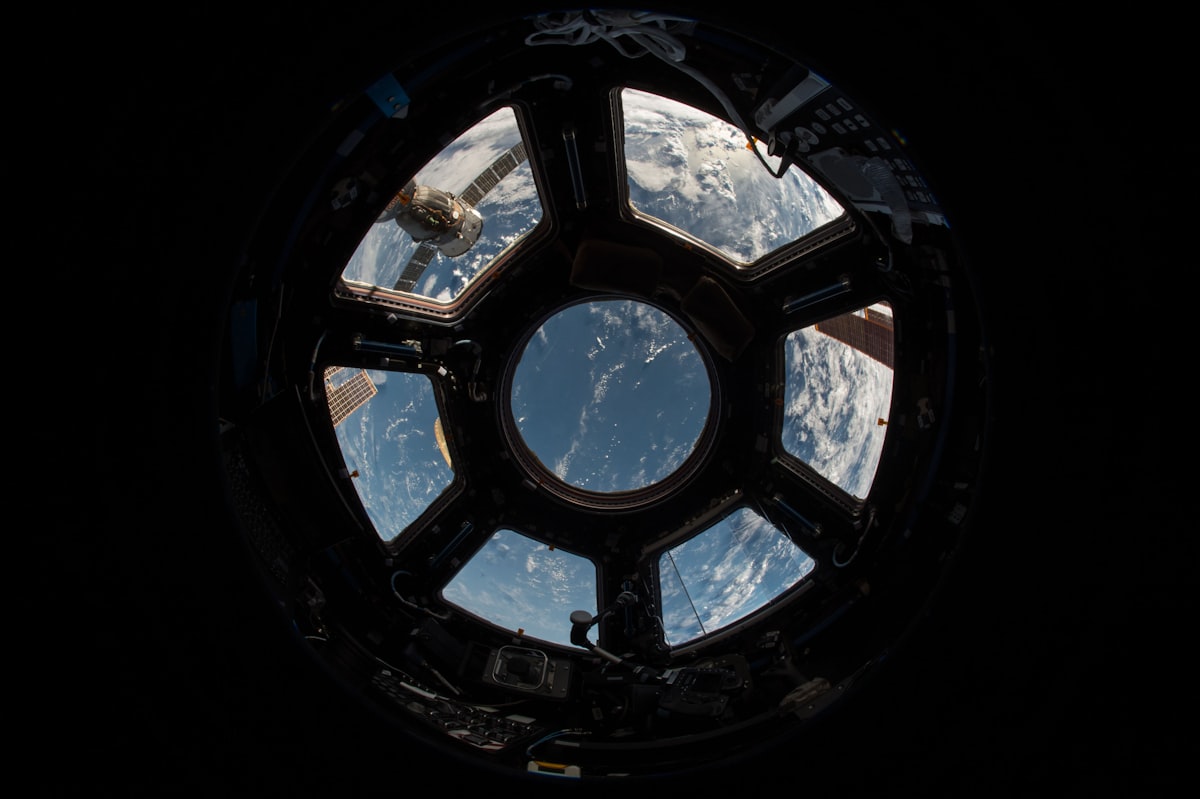
We are living through the greatest transformation in spaceflight since the dawn of the Space Age. For over six decades, space access was defined by expendable rocketry: multi-hundred-million-dollar titanium and aluminum vehicles were launched once, fired their engines for eight minutes, and plunged into the ocean to be discarded as scrap metal.
Imagine if a commercial transatlantic flight from London to New York required building a brand-new Boeing 777, only to throw the airplane away into the Atlantic Ocean after landing. An airline ticket would cost tens of millions of dollars, and global air travel would remain the exclusive preserve of wealthy governments. By introducing autonomous booster landings and rapid reusability, commercial space pioneers have rewritten the fundamental economics of entering the cosmos.
The Economics of Space Access: The Collapse of Launch Costs
During the Space Shuttle era, launching one kilogram of payload into Low Earth Orbit cost approximately **\$54,500**. When SpaceX perfected landing and reflown Falcon 9 first-stage boosters on autonomous drone ships at sea, launch costs tumbled beneath **\$2,600 per kilogram**—an extraordinary 95% reduction in launch costs within a single decade.
This dramatic cost reduction unlocked a burgeoning global commercial space economy: university student teams now launch miniaturized CubeSats, pharmaceutical companies manufacture fiber optics and crystalline drugs in microgravity, and constellation operators beam high-speed internet to isolated regions across the globe.
While Falcon 9 reuses only its first-stage booster (discarding its second stage), SpaceX’s **Starship** is designed for 100% full and rapid reusability. Standing nearly 400 feet tall and powered by 33 methane-oxygen Raptor engines generating 16.7 million pounds of thrust, Starship aims to lower launch costs beneath **\$100 per kilogram**, fundamentally altering humanity’s relationship with space.
Key Innovations Powering the Commercial Space Age
Full-Flow Staged Combustion
The Raptor engine utilizes dual preburners (oxygen-rich and fuel-rich), running cooler, producing maximum chamber pressure (350+ bar), and eliminating soot build-up for immediate reuse.
Mechanical Tower Catches
Eliminating heavy landing legs entirely by catching the returning 250-ton Super Heavy booster out of mid-air using massive robotic mechanical arms (“Mechazilla”) on the launch tower.
Orbital Propellant Transfer
Launching tanker Starships to refill interplanetary ships with cryogenic methane and oxygen in Low Earth Orbit, enabling 150-ton payloads to reach the Moon and Mars.
The Logistics of Martian In-Situ Resource Utilization (ISRU)
The fundamental engineering bottleneck of sending humans to Mars is the “tyranny of the rocket equation”: launching enough fuel from Earth to lift a spacecraft off Mars for the return trip would require a rocket larger than anything conceivable. The only viable solution is to manufacture all return rocket fuel directly on the surface of Mars.
How Starship Will Refuel on the Red Planet:
- Sabatier Methanation Reactors: Mars possesses an atmosphere composed of 95% carbon dioxide ($CO_2$). Automated industrial landers will draw in Martian atmospheric gas, compress it, and react it with hydrogen gas at 400°C over a nickel catalyst ($CO_2 + 4H_2
ightarrow CH_4 + 2H_2O$). This exothermic reaction produces pure methane ($CH_4$) rocket fuel and water. - Water Electrolysis and Oxygen Generation: The water produced by the Sabatier reaction—along with water extracted by mining subsurface Martian glacial ice sheets—is split via electrolysis into hydrogen and liquid oxygen ($2H_2O
ightarrow 2H_2 + O_2$). The oxygen is cryocooled to liquid form to serve as the rocket oxidizer, while the hydrogen is cycled back into the Sabatier reactor to produce more methane. - Cryogenic Fluid Management (CFM): Storing hundreds of tons of liquid methane (-161°C) and liquid oxygen (-183°C) over a 26-month stay on Mars without boiling off requires active cryocoolers, sunshields, and vacuum-jacketed storage tanks insulated with multi-layer reflective blankets.
- Closing the Ecological Loop: The industrial facilities developed to manufacture rocket propellant on Mars will simultaneously supply oxygen for human habitats, clean drinking water, and agricultural nitrogen, forming the closed-loop foundation for humanity’s first permanent interplanetary settlement.
The commercial aerospace revolution is not merely opening up new business frontiers; it is expanding the horizons of human destiny, taking the first decisive steps toward making life multi-planetary.
The Interplanetary Horizon: Building a Multi-Planetary Species
The ultimate aspiration of commercial spaceflight extends far beyond satellite internet or space tourism: it is the survival of human consciousness. As visionary astrophysicists like Carl Sagan have observed, every species confined to a single planet will eventually face extinction from asteroid impacts, supervolcanic eruptions, or civilizational collapse.
Establishing a self-sustaining city on Mars requires transporting millions of tons of cargo, agricultural domes, nuclear reactors, and hundreds of thousands of settlers. Reusable heavy-lift architectures are transforming this science fiction vision into an achievable engineering roadmap for the twenty-first century.
| Launch Vehicle | Reusability Mode | Payload to LEO | Estimated Cost per kg to LEO |
|---|---|---|---|
| NASA Space Shuttle (1981–2011) | Partial (Orbiter & solid boosters refurbished) | 27,500 kg | ~$54,500 / kg |
| SpaceX Falcon 9 | First Stage & Fairings Reusable | 22,800 kg | ~$2,600 / kg |
| SpaceX Falcon Heavy | Side Boosters & Center Core Reusable | 63,800 kg | ~$1,500 / kg |
| SpaceX Starship (Targeted) | 100% Fully & Rapidly Reusable | 100,000 – 150,000 kg | < $100 / kg |
Frequently Asked Questions
Why does Starship use stainless steel instead of carbon fiber?
SpaceX originally planned to use carbon fiber composites, but switched to 304L stainless steel. Stainless steel costs only \$3/kg (compared to \$130/kg for carbon fiber), becomes significantly stronger at cryogenic temperatures, and possesses a very high melting point, dramatically reducing the heat shield mass required for atmospheric reentry.
How long does a journey to Mars take?
Using a standard Hohmann transfer orbit during the biennial launch window (when Earth and Mars are aligned every 26 months), a one-way flight takes roughly 6 to 8 months.
Can fuel be produced on Mars for the return trip?
Yes. Through the Sabatier reaction, carbon dioxide from the Martian atmosphere ($CO_2$) is combined with hydrogen extracted from subsurface water ice ($H_2O$) to produce liquid methane ($CH_4$) and liquid oxygen ($O_2$), fully refueling Starship for its return flight to Earth.
The Logistics of Martian In-Situ Resource Utilization (ISRU)
The fundamental engineering bottleneck of sending humans to Mars is the “tyranny of the rocket equation”: launching enough fuel from Earth to lift a spacecraft off Mars for the return trip would require a rocket larger than anything conceivable. The only viable solution is to manufacture all return rocket fuel directly on the surface of Mars.
How Starship Will Refuel on the Red Planet:
- Sabatier Methanation Reactors: Mars possesses an atmosphere composed of 95% carbon dioxide ($CO_2$). Automated industrial landers will draw in Martian atmospheric gas, compress it, and react it with hydrogen gas at 400°C over a nickel catalyst ($CO_2 + 4H_2
ightarrow CH_4 + 2H_2O$). This exothermic reaction produces pure methane ($CH_4$) rocket fuel and water. - Water Electrolysis and Oxygen Generation: The water produced by the Sabatier reaction—along with water extracted by mining subsurface Martian glacial ice sheets—is split via electrolysis into hydrogen and liquid oxygen ($2H_2O
ightarrow 2H_2 + O_2$). The oxygen is cryocooled to liquid form to serve as the rocket oxidizer, while the hydrogen is cycled back into the Sabatier reactor to produce more methane. - Cryogenic Fluid Management (CFM): Storing hundreds of tons of liquid methane (-161°C) and liquid oxygen (-183°C) over a 26-month stay on Mars without boiling off requires active cryocoolers, sunshields, and vacuum-jacketed storage tanks insulated with multi-layer reflective blankets.
- Closing the Ecological Loop: The industrial facilities developed to manufacture rocket propellant on Mars will simultaneously supply oxygen for human habitats, clean drinking water, and agricultural nitrogen, forming the closed-loop foundation for humanity’s first permanent interplanetary settlement.
The commercial aerospace revolution is not merely opening up new business frontiers; it is expanding the horizons of human destiny, taking the first decisive steps toward making life multi-planetary.
The Logistics of Martian In-Situ Resource Utilization (ISRU)
The fundamental engineering bottleneck of sending humans to Mars is the “tyranny of the rocket equation”: launching enough fuel from Earth to lift a spacecraft off Mars for the return trip would require a rocket larger than anything conceivable. The only viable solution is to manufacture all return rocket fuel directly on the surface of Mars.
How Starship Will Refuel on the Red Planet:
- Sabatier Methanation Reactors: Mars possesses an atmosphere composed of 95% carbon dioxide ($CO_2$). Automated industrial landers will draw in Martian atmospheric gas, compress it, and react it with hydrogen gas at 400°C over a nickel catalyst ($CO_2 + 4H_2
ightarrow CH_4 + 2H_2O$). This exothermic reaction produces pure methane ($CH_4$) rocket fuel and water. - Water Electrolysis and Oxygen Generation: The water produced by the Sabatier reaction—along with water extracted by mining subsurface Martian glacial ice sheets—is split via electrolysis into hydrogen and liquid oxygen ($2H_2O
ightarrow 2H_2 + O_2$). The oxygen is cryocooled to liquid form to serve as the rocket oxidizer, while the hydrogen is cycled back into the Sabatier reactor to produce more methane. - Cryogenic Fluid Management (CFM): Storing hundreds of tons of liquid methane (-161°C) and liquid oxygen (-183°C) over a 26-month stay on Mars without boiling off requires active cryocoolers, sunshields, and vacuum-jacketed storage tanks insulated with multi-layer reflective blankets.
- Closing the Ecological Loop: The industrial facilities developed to manufacture rocket propellant on Mars will simultaneously supply oxygen for human habitats, clean drinking water, and agricultural nitrogen, forming the closed-loop foundation for humanity’s first permanent interplanetary settlement.
The commercial aerospace revolution is not merely opening up new business frontiers; it is expanding the horizons of human destiny, taking the first decisive steps toward making life multi-planetary.